
The Rise of Wei-Luo
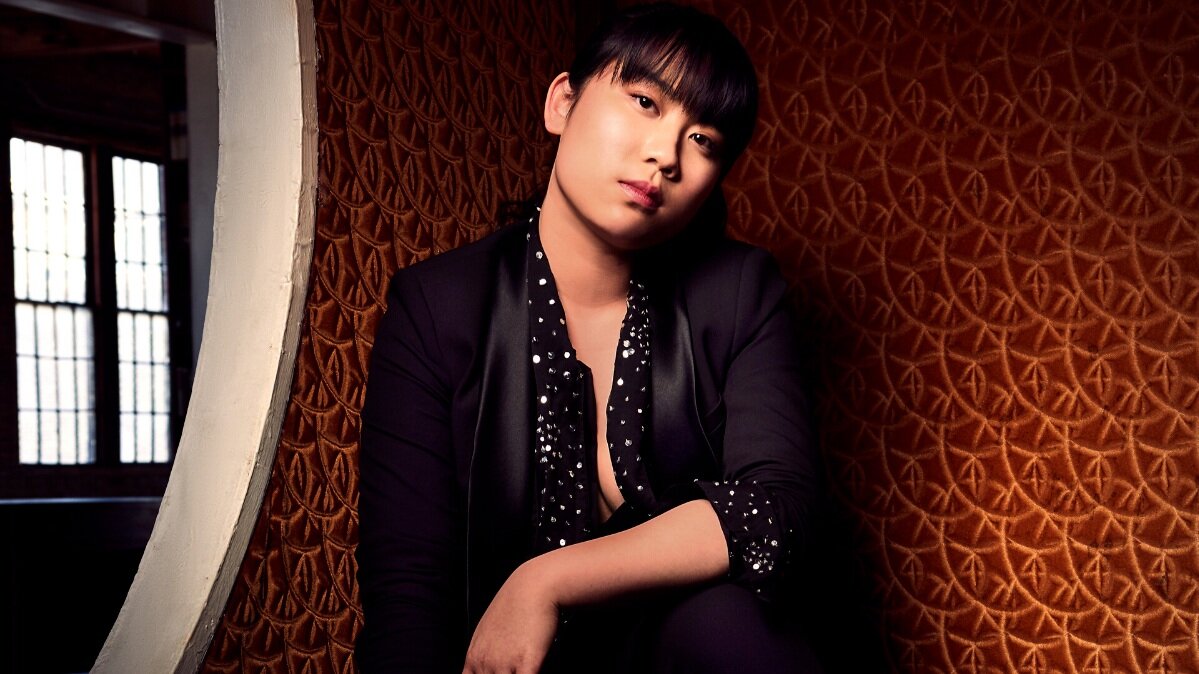
Wei-Luo is a 20-year-old pianist who has been making waves since she was just 13. We’re always excited by young artists who are charting new paths in classical music, and Luo is one of them. She was the recipient of the 2018 Gilmore Young Artist Award, and in her most recent achievement, Luo performed at the Gilmore Festival in January as part of their Rising Stars series.
Her concert included works from Mozart, Schubert, Chopin, and Ravel, and closed out the season for the Gilmore Festival. Among other works, Luo performed Poems, a work she commissioned, written specifically for her, by contemporary American composer and pianist Marc Neikrug.
Asked how audience members might best appreciate listening to the piece she replied, “My best tip is that we let our imagination come out, relax, and feel the atmosphere and colors the music and I create.” Luo’s performance certainly allows the mind to relax and imagine the beauty that accompanies her pieces.
In addition to her performance at The Gilmore Festival, she just made her debut with the San Diego Symphony and released an album on the Decca label. The reviews are in, and they are raving. Kanzen Arts said of her recent performance with the San Diego Symphony: “If you stayed at home for this concert, it was your profound loss. Luo seems destined for stardom.”
Her album features pieces from Haydn, Prokofiev, and Shostakovich, while the opening work is La valse by Maurice Ravel. According to ClassicsToday, “the opening salvo abounds with dazzling contoured runs and glissandos, awesome octave passages, staggeringly precise leaping chords, and climaxes that are massive yet never overblown.”
Wei Luo is undoubtedly a young artist to watch. Download her new album here.
Explore More





Composer Sean Shepherd shares his journey from Reno to international commissions with leading orchestras, highlighting the role of mentorship, friendship, and collaboration in shaping his music. He discusses works like Lattice Work, Quadruple Concerto, and Sprout, offering insights into his creative process, influences, and belief in music as a living, collaborative art.

Pianist Tanya Gabrielian shares her uncompromising approach to music-making—balancing radical authenticity, intellectual depth, and a mission to revive forgotten works. From Alexander Siloti’s overlooked editions to transformative audience encounters, discover how Gabrielian redefines success in the classical world.

Discover the story of the Leonkoro Quartet—Berlin’s rising chamber ensemble making waves across Europe and North America. In this Classical Post podcast, they share how a viral YouTube video launched their career, the impact of mentorship from legendary quartets, highlights from their North American debut tour, and the creative spark behind their upcoming Alpha Classics album. A conversation about friendship, artistry, and building something that lasts.

Discover the story of baritone Konstantin Krimmel, from his early days in a German boys’ choir to international acclaim at venues like the Bavarian State Opera, Wigmore Hall, Schubertiade, and his U.S. debut. In this Classical Post podcast, Krimmel shares how competitions, repertoire choices, and his passion for storytelling through song have shaped his career.

The name Rimsky-Korsakov is enshrined in the canon of Russian music, yet until now, one remarkable branch of that musical lineage remained nearly forgotten. With the release of YULIYA: Forgotten Songs of Julia Weissberg Rimsky-Korsakov on Azica Records, soprano Sarah Moulton Faux and pianist-composer Konstantin Soukhovetski revive the voice of Julia Weissberg Rimsky-Korsakov (1878–1942)—Nikolai Rimsky-Korsakov’s daughter-in-law, a brilliant Jewish composer whose legacy was buried by antisemitism, war, and time.

Harpist Ashley Jackson’s Take Me to the Water redefines classical music with a spiritual, cross-cultural journey through works by Alice Coltrane, Debussy, and Margaret Bonds. Blending sacred traditions and global lineages, her album is a powerful meditation on unity, beauty, and reflection.

Mezzo-soprano Devony Smith and pianist Danny Zelibor reimagine American art song in In This Short Life—a powerful debut album of contemporary works by diverse composers like Higdon, Lang, Boykin, and Liverman. Out June 13, it’s a bold celebration of collaboration, resilience, and genre-defying artistry.

Explore how the Takács Quartet bridges generations through music—pairing Florence Price and Dvořák, collaborating with Marc-André Hamelin, and championing new voices like Clarice Assad and Jordan Bak. Rooted in tradition, they continue to innovate from their home in Boulder, Colorado.

Discover the remarkable journey of Sir Stephen Hough—from early acclaim and Grammy-winning performances to composing during the pandemic. Explore how this celebrated pianist, writer, and composer continues to evolve with curiosity, craftsmanship, and courage in the world of classical music.


Explore flutist Demarre McGill’s path from rising talent to principal roles, Avery Fisher Career Grant winner, mentor of talent, and champion of new music.

Discover violinist Bella Hristova’s journey from Bulgaria to Carnegie Hall, her Lineage project, and her impact on solo violin repertoire and new music.

Discover pianist Kate Liu’s remarkable rise from Chopin International Competition laureate to globe‑trotting soloist. Explore her new Orchid Classics release pairing Beethoven’s transcendent Sonata Op. 110 with Brahms’s youthful yet monumental Sonata No. 3, plus upcoming concerto dates in Zagreb, Ann Arbor and Warsaw.

Explore how composer Sebastian Currier fuses classical roots, bold collaborations, and new technologies to redefine contemporary music’s possibilities.

Discover how Norwegian cellist Sandra Lied Haga evolved from child prodigy to global star, performing iconic concertos and forging a bold classical legacy

Discover how violinist Maria Dueñas merges virtuosic technique and deep expression—from competition triumphs to her bold new Paganini Caprices album.